Not every lot suits a buried line, since slope, soil and the place the water can go all matter. A local installer can tell you whether pipe, extensions or a surface option fits better. Call the number on this page to be connected with a local gutter company in Louisville.
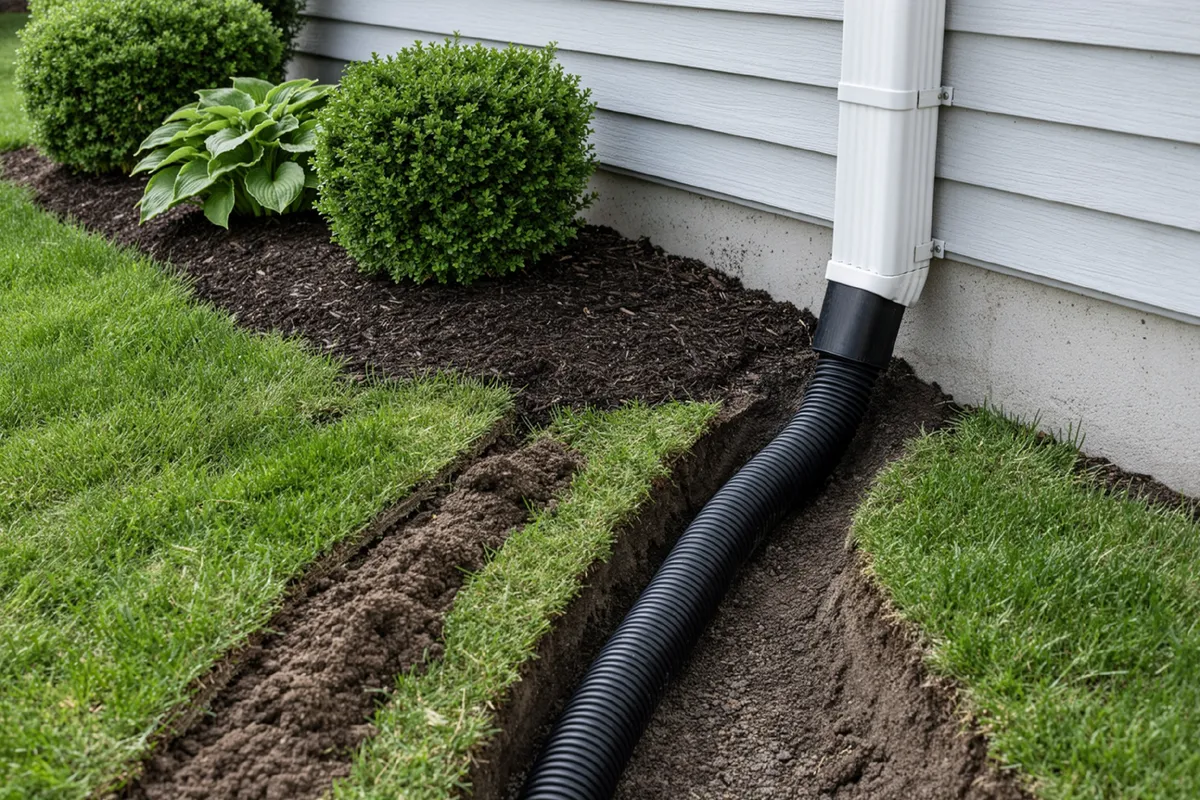
Extensions versus buried pipe
A surface extension is simple but can be tripped over, mowed around or crushed. Buried pipe is out of the way but needs slope, a clear exit and a bit of upkeep. Ask the crew which suits your yard and how you use it. Photos of the yard help the company advise you.
Where the outlet goes wrong
A pop-up emitter that is buried in mulch, a daylight pipe ending in a pit of debris or an outlet that discharges onto a neighbor's lawn will all cause trouble. The end of the line deserves as much attention as the start. Walk the end of the line with the crew if you can.
Multiple downspouts
Combining several downspouts into one line saves digging but can overload the pipe in a heavy storm. Separate lines cost more but handle flow better. A crew should size the pipe to the roof area it serves and explain the choice. Ask whether one line or two suits the layout.
What the installer will ask
Expect questions about where each downspout is, where you would like water to go, what is buried in the yard and what the drainage looks like in heavy rain. Mention irrigation lines, trees and anything you know about utilities. Short answers now save digging later.
If the lawn is sinking
A sunken strip above the pipe, a new wet patch in a dry area or a hole that opens near a downspout can mean a broken or separated line. Keep kids and pets off the spot and ask a company to inspect before the next storm.
Useful local facts for Louisville
Permits for work on Louisville homes are handled by the Louisville Building Safety. If the job grows into roofing, fascia framing or structural repair, confirm who pulls the permit before work starts.
On permits, the City of Louisville notes this: Re-roof is listed as a minor permit; the list does not mention gutters.
Wet spring snow and ice sliding off the roof are what bend most gutters in this part of Colorado; ask how far apart the company sets its hangers.
Much of the metro sits on clay soils that swell when wet, so downspouts should carry water well away from the foundation.
Summer hailstorms hit this area often, and dents in gutters can be useful evidence when a roof is inspected for storm damage.
Note where water overflows during a storm and where it pools on the ground. Those two details point straight to the problem.
Companies that take calls here usually also work in Lafayette, Superior and Broomfield.
Underground Downspout Drains questions in Louisville
What is an underground downspout drain?
Who locates buried utilities before digging?
Can tree roots clog a buried drain?
How do I know if my existing line works?
More gutter repair services in Louisville
Underground Downspout Drains nearby
Sources
Last updated: