Rain gutters collect water that runs off your roof and send it through downspouts away from siding, landscaping and the foundation. In Denver, where soils swell when wet and storms arrive fast, that job matters. Call the number on this page to be connected with a local gutter company in Denver.
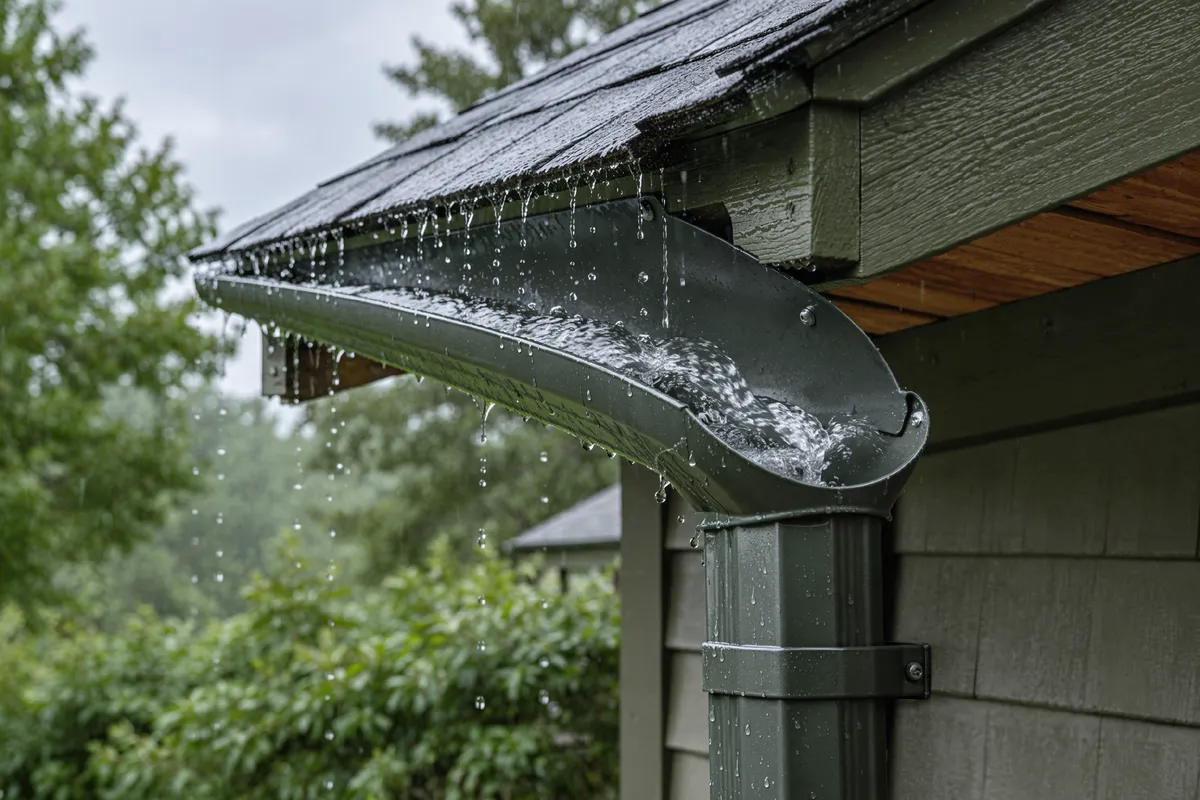
What rain gutters do
Without gutters, a roof dumps water along the entire eave, which splashes siding, erodes beds and soaks the soil next to the foundation. Gutters gather that flow into one path. The parts are the trough, hangers, end caps, outlets, downspouts and extensions, and all of them need to work together.
Why drainage matters on the Front Range
The Colorado Geological Survey says major Front Range population centers sit at least partly on swelling soils or shales. It advises keeping ground sloped away from the house and carrying roof runoff at least 10 feet from the building. Denver's own homeowner runoff guide says downspouts must be directed away from foundations and prefers letting runoff spread over landscaping rather than piping it to the street. It adds that underground downspout lines need a Denver Public Works permit.
Signs your rain gutters are not coping
- Water overshooting the gutter during a heavy downpour.
- Overflow at inside corners or below a valley where two roof slopes meet.
- Downspouts that dump next to the foundation or onto a walkway.
- Ice and icicles hanging from the gutter after a thaw.
Sizing and capacity
This Old House guidance gives K-style 5-inch gutters about 5,520 square feet of drainage area and 6-inch about 7,960. It also offers a rule of thumb of about 1 square inch of downspout cross-section per 100 square feet of roof, and warns that sudden downpours can overwhelm a system that looks fine on paper.
Older homes and new builds
Older houses in Denver's core may have box or half-round gutters built into the roof edge, which need different repairs than modern K-style gutters. Newer subdivisions usually have thin builder-grade gutters that homeowners later upgrade. A local company can tell you which situation you have.
Rain barrels
Colorado allows up to two rain barrels with combined capacity up to 110 gallons per household, for outdoor use on the same property, with no state water permit. An HOA may set reasonable rules on location and appearance, but cannot ban them, according to CSU Extension as summarized in state materials.
What it costs
Angi's Denver cost data shows $4 to $50 per linear foot for installation depending on material and a typical Denver job total of $611 to $1,905. National averages from HomeGuide list $30 to $75 to replace or add a single downspout.
Rain Gutters questions from Denver homeowners
Do I really need rain gutters in Denver?
How far should downspouts discharge?
Can I pipe my downspouts underground in Denver?
Can I collect rain from my gutters in a barrel?
Related gutter repair services in Denver
Helpful guides
Rain Gutters in nearby cities and towns
Arapahoe County
Jefferson County
Adams County
Douglas County
Broomfield County
Boulder County
Weld County
Elbert County
Larimer County
Clear Creek County
Gilpin County
Park County
Sources
Last updated: